Helping a shy primary-school child
Shyness is a temperament, not a problem to be talked out of a child. The useful work is to widen their world by a notch at a time — without turning every birthday party into a test.
By Priya Raman, Families editor · 15 January 2026 · 10 min read
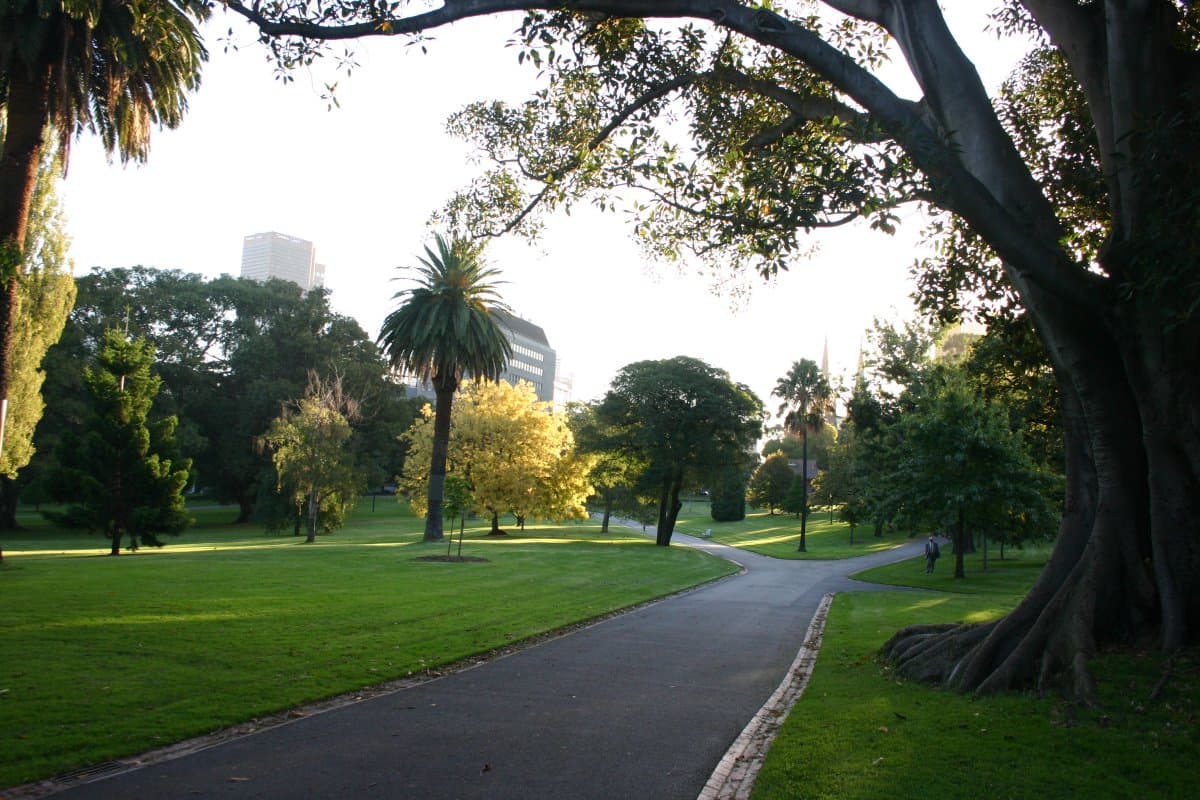
Photo: Fitzroy Gardens, Melbourne, Melbourne by Donaldytong. CC BY-SA 3.0. Full image credits.

Some children enter a room as if the room were already theirs. Others pause in the doorway and take a reading. They watch who is loud, where the bags go, whether the teacher is in a hurry. Adults call this shyness, often in a voice that is half apology. The child hears the label long before they have a chance to decide whether it fits.
Shyness is not a failure to be Australian. It is not a preview of a lonely life. It is, for a large number of primary-school children, a temperament: a preference for warming up, a sensitivity to new faces, a dislike of being the sudden centre. The work for adults is not to sand that down. It is to keep it from becoming a wall.
This essay is for parents and carers of children in the school years. It is not a diagnosis and not a clinic letter. If a particular child is suffering, the useful first conversations are with them, with the teacher, and with a GP.
What shyness is, and what it is not
Temperament researchers have spent decades on a simple observation: some nervous systems take longer to decide that a new situation is safe. You can see it at a playground. One child runs to the slide. Another stands near your knee and catalogues the slide. Both can have a good afternoon. Only one is likely to be told, in front of other parents, that they need to “come out of their shell.”
Shyness is not rudeness, though it can look like it when a child will not answer a shopkeeper. It is not always anxiety, though anxiety can wear its clothes. It is not a sign that you have “babied” them, a charge that still gets made in school car parks as if warmth were a contaminant.
Social anxiety, in the ordinary meaning used by services such as Beyond Blue, is more than a slow warm-up. It is fear of judgement that starts to run the diary. The child will not go to the party they wanted to go to. They will not speak in a class they understand. They have a story about themselves — I will go red, I will say the wrong thing, they will laugh — that is stronger than the evidence of last week’s fine afternoon. Shyness can sit beside that fear. It does not automatically become it.
A composite, not a named child: a Year 3 student who reads a year above the class, has one close friend, and spends the first twenty minutes of a birthday party near the chips. By the time the cake arrives they are in the game. The host’s parent says, brightly, “She’s so shy!” The child looks at the floor. The afternoon was succeeding until it was narrated.
The Australian primary school as a social machine
Primary school is a long social experiment with bells. There is the classroom, which at least has a seating plan. There is the yard, which does not. There is assembly, sport, the canteen line, the birthday-party economy of Friday afternoons, and the child who had a group last term and does not this term.
Open-plan classrooms, group tables, and “turn and talk” routines are hard work for a child who thinks before they speak. So is a specialist teacher they see once a week. So is a relief teacher. None of these things are cruel. They are simply a lot of novelty for a slow-to-warm nervous system.
Sport can be a relief or a trial. Team games with unclear rules and a loud coach are a poor match. A smaller club, a repeating skill, a parent who stays for the first three Saturdays without coaching from the sideline — these are often a better match. The aim is not a scholarship. The aim is one place where their body is occupied and their mouth is not the main event.
Friendship, at this age, is less stable than adults want it to be. Groups form around who is in the same reading table, who lives in the same street, who is allowed on the same device. A shy child with one friend is not a tragedy. A shy child with no one to sit with, week after week, needs adults to do some quiet architecture: a lunch club, a paired job, a playdate that is short and hosted at home first.
Cultural difference belongs in this picture without being turned into a speech. A child whose family does not treat adult strangers as conversational partners may look “shy” in a classroom that rewards performance. A child who is translating for a parent at the office door is not shy in any simple sense. Teachers need the facts, not a theory.
What helps without turning life into therapy
Prepare, then step back. Before a new event, tell them the sequence. Where you will stand. Who will be there. What they can say if their mind goes blank. Then let them use the plan. Hovering at the edge of the game and feeding them lines is its own kind of spotlight.
Teach a small public script. “Hello. I’m here for Maya’s party. Can I put this down?” Practise it in the kitchen until it is boring. Boring is the goal. Social courage is often just a sentence that does not have to be invented on the doorstep.
Give them a job. Jobs are social camouflage of the best kind. Handing out books, feeding the class lizard, holding the attendance folder, setting up cones at Auskick. A child with a task has a reason to move through the room that is not “perform personality.”
Do not narrate their character to other adults in front of them. “He’s shy” becomes a costume. So does “She’s my quiet one.” Talk to other parents later if you need a practical arrangement. In the moment, talk about the thing in front of you: the bag hook, the present, the drink bottle.
Widen by a notch, not a leap. A short playdate before an overnight. A smaller party before a huge one. A familiar park before a holiday program. If they succeed at the smaller thing, name that. If they do not, do not treat it as a referendum on their future. Try again with a smaller notch.
Protect recovery time. A full school day is a lot of faces. Some shy children come home and explode, or go silent, or need an hour of Lego with no questions. That is not antisocial behaviour. It is the bill for being good in public. After-school activities every afternoon can wait.
Let them watch first. Watching is information-gathering, not refusal. A child at the side of a game is sometimes one minute away from joining. Adults who haul them into the circle to “include” them can reset the clock.
The Raising Children Network’s parent material has, for years, treated rehearsal and small steps as the core method. It is unglamorous and it works more often than a speech about confidence.
Confidence is not a personality transplant. It is a stack of afternoons that went well enough.
What does not help, even when it is well meant
Pushing them into the middle of a room to “get it over with.” Bribing them to be louder. Comparing them with a sibling who collects friends the way other children collect rocks. Calling them rude when they freeze. Booking a huge holiday program in the first week of the long summer because you have to work and hoping they will “come out of themselves.”
The last of those is a real bind. Care is expensive. Work is not optional. If a holiday program is necessary, visit first. Name one adult. Pack a familiar object. Ask the service how they handle the first morning. A shy child can survive a big group. They survive it better when someone knows they will need a slower landing.
Another well-meant error is treating every quiet moment as a problem to be solved with extra talk. Some children think in private. They will tell you about the day at 7pm, or in the car, or not at all until Thursday. Talking to children about feelings is still worth doing. It is worth doing at a volume they can stand.
School as a partner, not a judge
A useful email to a teacher is short. What you see at home. What helps. What you are not asking them to do. “She needs a minute before she answers. A known partner helps. Please do not single her out to speak first.” Most teachers already know this. Some are managing twenty-six other children and a yard duty and will still try.
If the child is being left out, or teased for being quiet, or hiding in the library every break, ask for the wellbeing teacher or school counsellor. That is not an escalation in the dramatic sense. It is the school using the staff it already has. Notes matter. So do specifics: which days, which breaks, which names if the child is willing to give them.
Classroom public speaking is a recurring flashpoint. Some schools still run a weekly “news” or a term speech. For a shy child this can be useful practice or a weekly humiliation. Ask whether they can present to a smaller group, or use notes, or go second rather than first. The curriculum goal is communication, not a TED talk.
If school mornings have become a battle of stomach aches and lost hats, you may be looking at more than shyness. When a child's worry looks like anger is about that crossover. So is a conversation with the GP.
Screens, friendship and the shy child’s internet
Online life can be a shelter and a substitute. A shy child who games with two cousins after school may be practising social timing in a way that helps. A shy child whose only friends are usernames, and who is miserable in every room with a real body in it, needs adults to keep the real rooms available.
Group chats in late primary school are a new kind of playground. They are also a new kind of exclusion. You will not be able to moderate every chat. You can keep devices out of bedrooms, know the platform, and use the eSafety Commissioner’s parent material when something ugly happens. You can also insist on one regular face-to-face plan so that friendship does not become entirely textual.
When to treat this as more than temperament
See a GP if the child’s world is getting smaller; if they are persistently unhappy about it, not just inconvenienced; if they refuse school, sport, and friends they used to manage; if they speak about themselves with contempt; if physical symptoms — stomach, head, sleep — are turning into a second problem.
A GP can check the unglamorous medical things and talk with you about a psychologist if that is the right extra. Finding a psychologist is the practical essay on that step. Ask for someone who sees children, and say whether the issue is social fear, school, or both. A Mental Health Treatment Plan is one common way Australian families reduce the cost. It is not a verdict.
Beyond Blue’s pages for parents, the Raising Children Network, and Kids Helpline on 1800 55 1800 are the public layer. Kids Helpline is designed for children and young people; a primary-school child may or may not want to ring. Some will. The number is still worth having on the fridge.
If a child is in immediate danger, call 000. That is a different category from a hard birthday party.
A longer view, without the inspirational ending
Plenty of adults who now run meetings, theatres, surgeries and classrooms were the child on the edge of the oval. Plenty of other shy children grow into shy adults with good lives and a small circle. Both outcomes are allowed. Your job is not to produce an extrovert. It is to keep doors from closing while the child is still growing into their own pace.
The children and families hub is the rest of this shelf: night fears, preschool goodbyes, and the school-years version of worry. If they are approaching high school, the social world will get louder again, and the same slow-warm-up advice still holds.
For now, stand near the doorway if they need you there. Do not give their personality away in a joke. Let them watch the game for a minute. Then, when they are ready — and not as a performance for the other parents — walk with them as far as the edge, and let them take the last step as if it were their idea. It should be.
Questions readers ask
- Is a shy child the same as a socially anxious child?
- Not necessarily. Shyness is a tendency to warm up slowly. Social anxiety is fear that keeps shrinking what a child will do. Many shy children have friends, cope at school, and simply prefer the edge of the group. Worry if avoidance is growing, if they are miserable about it, or if ordinary events have become impossible.
- Should I force them to say hello?
- A brief, practised greeting is fair. A public performance is not. Teach a small script at home, stand near them at the door, and do not narrate their personality to the host. Shame is a poor social coach.
- What can the school actually do?
- A good teacher can give a shy child a job, a predictable partner, and time to answer. Ask for that in one calm email rather than a long theory of your child's soul. The school counsellor or wellbeing teacher is the next step if the child is isolated, teased, or starting to miss days.
- When should we see a GP?
- If shyness is paired with stomach aches before school, shrinking friendships, or a child who says they hate themselves in groups, book a GP. Beyond Blue and the Raising Children Network have parent guides. A Mental Health Treatment Plan is one way a GP can help a family see a psychologist if that becomes the right next step.
Priya covers children, adolescents and the adults who care for them. She writes from Meanjin / Brisbane. More in Children & families.