Loneliness in older Australians
Loneliness in later life is not a personal failure and it is not solved by being told to join a club. It is a health issue with ordinary, practical remedies — and it is allowed to take more than one attempt.
By Margaret Liu, Later life editor · 12 January 2026 · 9 min read
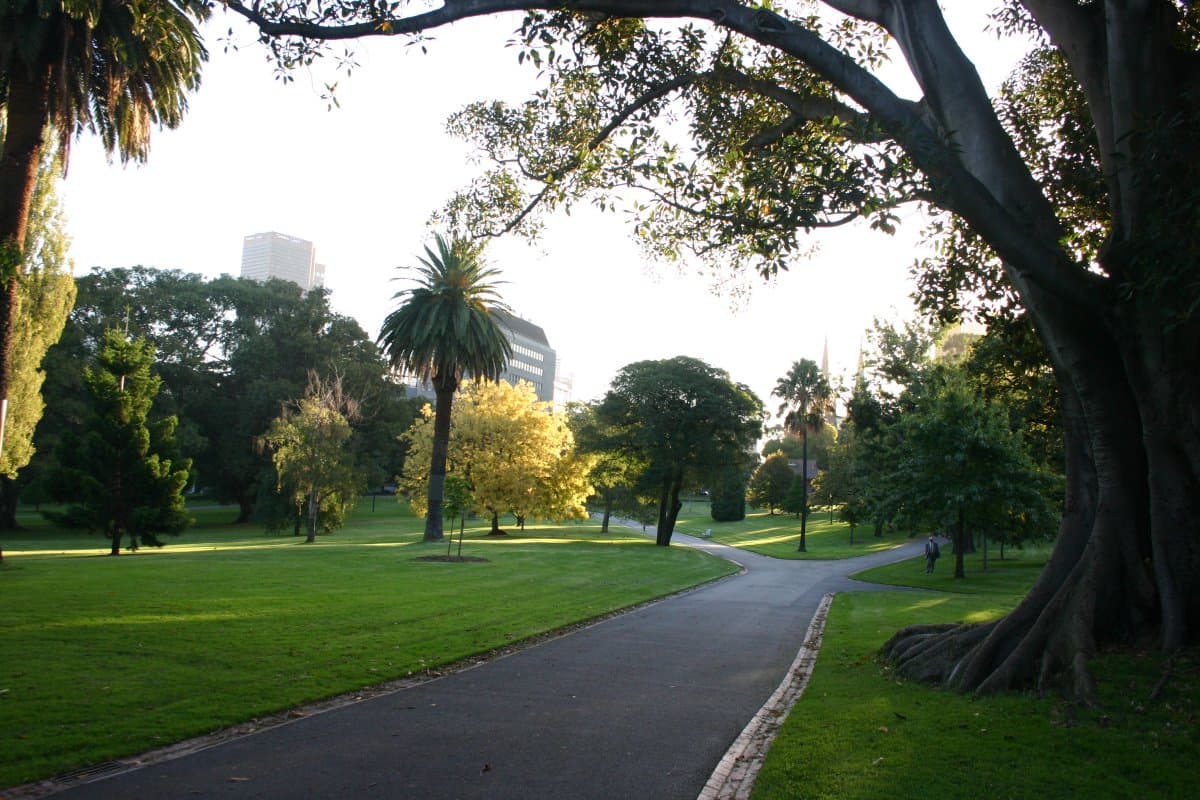
Photo: Fitzroy Gardens, Melbourne, Melbourne by Donaldytong. CC BY-SA 3.0. Full image credits.

Loneliness is one of the few pains people will still treat as a confession. Pain in a knee gets a referral. Pain in a week of unshared evenings gets a suggestion to join something, or a joke about getting a dog. The joke is not always unkind. It is almost always too small for the thing it is trying to cover.
Older Australians are not a single story. Some have a full diary and a phone that does not stop. Some have a house that has gone quiet in stages: a partner died, a child moved to another state, a hearing loss made the café unbearable, a licence was handed in, a pandemic taught the body that staying home was the responsible thing and the body never quite unlearned it. This essay is for the quiet house. It sits in our later life writing because the culture still treats late loneliness as an atmosphere rather than a problem a person is allowed to work on.
Emotional Health Clinic is a journal, not a service. If you are unsafe, or thinking of dying, call 000 or Lifeline. What follows is a description of a common condition of a long life, and of the ordinary doors that already exist.
What loneliness is, and what it is not
Loneliness is a gap. On one side, the contact you have. On the other, the contact that would make you feel like a person among people. The gap can open in a crowd. A shopping centre in December is full and can be one of the loneliest places in the country if no one there would notice your absence. Living alone is a housing arrangement. Widowhood is a grief. Introversion is a temperament. None of these is automatically loneliness, and any of them can include it.
There is a useful distinction between solitude and loneliness that people in later life often already understand. Solitude is chosen and has a bottom to it; you can come back. Loneliness is a weather that follows you into the garden. You can be content for a morning and still dread the evening, when the day has no witness.
The body keeps this weather. Appetite slips. Sleep fragments or expands into the afternoon. Aches get more airtime because there is no conversation to interrupt them. Small decisions become heavy: the shower, the letter, the birthday message you do not send because you have left it too long. Shame then adds a lock. You do not ring because you have nothing to report. You have nothing to report because you have not rung.
The Australian Institute of Health and Welfare has treated social isolation and loneliness as subjects that belong in a health conversation, not only in a lifestyle one. Beyond Blue and Healthdirect both describe, in plain language, how isolation and low mood feed each other. You do not need a new statistic to take that seriously. You need a week that has at least one planned human in it.
Being seen on a Tuesday is a form of care. It does not have to be intimate. It has to be repeated.
How a life becomes sparsely populated
Death is the obvious thinner. A partner of forty years takes with them a whole language — the shorthand, the evening news commentary, the person who knew how you take your tea and that you hate the telephone. Friends die in a cluster, because they were a cluster. You become the one who goes to the funerals, and then the one who notices that the funerals have stopped because the circle has.
Distance is the quieter thinner. Australian families are interstate families. A child in Perth and a parent in Adelaide can love each other sincerely and still fail at the weekly call because both are waiting for a better time. Video helps some people and exhausts others. A screen is not a kitchen.
Health is a third. Hearing loss turns group conversation into a test. Vision loss makes the night bus impossible. Continence, dizziness, pain, a tremor — any of these can make a person decline an invitation while saying they are busy. They are busy managing a body. The invitation, declined often enough, stops coming. Mobility scooters and community transport exist; they require a pride conversation that many people postpone until the isolation is already deep.
Retirement, which has its own essay in this journal, removes the accidental colleagues — the people you did not choose and therefore did not have to impress. For some, that is a relief. For others it is the moment they discover that their friendships were all location-based, and the location has closed.
There is also the particular loneliness of being the capable one. The person who still drives, still does the tax, still sits at other people’s bedsides, can be surrounded by need and starved of peers. Carer Gateway is aimed at that person, whether or not they use the word carer. My Aged Care is the door for assessments when the house itself is starting to fail. Using either is not a social outing. It can, sometimes, free enough time and enough help that a social outing becomes thinkable again.
What does not help, and what might
It does not help to be told that loneliness is all in the attitude. Attitude is not a bus route. It does not help to be given a list of twenty clubs by a relative who will not come to the first morning with you. It does not help to be compared to the neighbour who “gets out.” The neighbour may have a daughter around the corner, or a temperament that finds rooms easy, or a hearing aid that works.
What might help is smaller and more repetitive than a reinvention.
One standing appointment that is not a doctor. A library morning. A café in which the staff have started to remember your order. A faith service, if that is your language. A community garden. A University of the Third Age class in which you are allowed to be a beginner. A Men’s Shed, which is not only for men who like timber; it is a room in which conversation can happen sideways, over a task. Bowls, choir, a swimming group at the local pool, a knitting circle that does not require you to be good at knitting. The activity is a pretext. The pretext is allowed to be ordinary.
A telephone that you treat like a pill. Same two people, same days. Short is fine. The point is the repetition, which teaches both nervous systems that the relationship is still on the books. If you have left it so long that the call feels impossible, a postcard or a text that says I have been quiet, I am still here is a start. Most people are kinder than the delay has led you to believe.
A repair of the senses. Hearing aids that are actually worn. Glasses that are up to date. A dentist. These are social tools. They are also why a GP visit about loneliness should include the body, not only the diary.
A repair of transport. Community buses, council schemes, volunteer driver programs, a taxi card if you are eligible — the names vary by place. The local council aged-care officer, a neighbourhood house, or My Aged Care can be less proud than asking a child for a lift every Thursday. Pride is expensive when it costs you the Thursday.
If you are LGBTQ+ and older, or from a community whose language is not the one spoken at the bowls club, look for the specific group rather than forcing yourself through a room that does not recognise you. They exist in more cities and regional centres than they used to. A community health centre will often know the names.
When loneliness has become low mood
The two braid. Isolation makes depression easier; depression makes isolation feel like the only honest option. If you have stopped washing, stopped cooking anything you like, stopped opening the curtains, or started to think the world would be tidier without you, that is no longer only a social problem.
See a GP. Say the word lonely if you can. If you cannot, say I have not spoken to anyone this week except the checkout. Ask them to look at mood, sleep, alcohol, pain and medication. Ask whether a Mental Health Treatment Plan is appropriate. Medicare can rebate a limited number of sessions with a psychologist or other eligible clinician; there is often still a gap fee, so ask.
Finding a psychologist as an older person can mean asking whether the clinician is comfortable with this stage of life — grief, caring, hearing, the particular shame of asking for help after decades of being the help. What CBT actually involves is one method among others. It can be useful when the mind has a set of conclusions that keep you in the house: no one wants me, I have left it too late, I will be boring. Those sentences feel like facts. They are allowed to be tested.
If getting to an appointment is the barrier, ask about telehealth, about a home visit, about a community mental health team. Availability is uneven. Asking still changes some rooms.
Adult children, if you have them, may need a clearer sentence than you have been using. I am not all right in the evenings is more usable than I don’t want to be a bother. They cannot move interstate tomorrow. They can ring on Thursdays. They can book a week. They can stop sending articles about clubs and instead sit with you through the first visit.
Neighbours are an underused Australian resource. The person who takes the bin in is already in a relationship with you. A jar of jam, a comment on the garden, a key left with someone who will notice the uncollected mail — these are not sentimental. They are a thin version of the street that used to do this work without being asked.
If you are the one who is worried about someone else
You cannot visit a person into company once a year at Christmas. You can put one repeating date in both calendars. You can go with them the first three times, which is the part most people skip. You can notice whether hearing, transport or continence is the real door. You can offer to sit in the GP waiting room.
You can also tell the truth if you are the distant child: I cannot be your daily company, and I will not pretend I can. Then name what you will do. A weekly call at a set time is worth more than a guilty silence and a burst of activity after a scare.
If the person you love is a danger to themselves, do not manage it alone. GPs, Aged Care Assessment, the local mental health crisis team, 000 — these exist because families get out of their depth. Carer Gateway can support you while you support them.
A more modest picture of company
The aim is not a packed social calendar and a photogenic Christmas. The aim is a life in which you are known in at least two places, and in which a Tuesday has a witness. That may look like a dog, a shopkeeper, a sister on the phone, a volunteer coordinator who would ring if you did not arrive. It may take several false starts. False starts are not evidence that you are bad at being alive. They are evidence that rooms are awkward, and that awkward is survivable.
You are allowed to want company without being entertaining. You are allowed to be lonely and still have a partner in the house. You are allowed to ask for help with this as you would ask for help with a stair rail. The stair rail is not a personality change. Neither is a Thursday lunch that you keep even when the mood says stay home. Keep the Thursday. Let the mood catch up. That is not a slogan. It is how a long life stays in the world.
Questions readers ask
- Is loneliness the same as living alone?
- No. Plenty of people live alone and are content. Plenty of people live with a partner or in a busy household and still feel unseen. Loneliness is the gap between the company you have and the company you need, not a headcount.
- Who should I tell if I have gone very quiet?
- A GP is a good first professional. A neighbour, an adult child, a faith leader or a friend can be the first human. If you cannot keep yourself safe, call 000 or Lifeline on 13 11 14. Beyond Blue is also set up for this conversation.
- What if I am lonely and I also care for someone else?
- That combination is common and easy to miss, because a carer’s week is full of people and still short of company. Carer Gateway exists for information and support. Your own GP appointment still matters. You are not only the person who drives to the other person’s appointments.
- Do I need a psychologist for loneliness?
- Not always. Sometimes the need is transport, hearing aids, a regular lunch, or a grief that has to be named. If low mood, anxiety or shame have taken hold, a GP may suggest a Mental Health Treatment Plan and rebated sessions. Ask about the gap fee.
Margaret writes about ageing, retirement, loneliness and the emotional work of a long life. She lives in Adelaide. More in Later life.