Exam stress, the HSC and the VCE
Year 12 in New South Wales and Victoria is a long public season, not a single Tuesday. The useful work is to treat the year as a load to be managed — sleep, scope, and a sense of proportion — rather than as a personality test.
By Nathan Cole, Features writer · 20 November 2025 · 10 min read
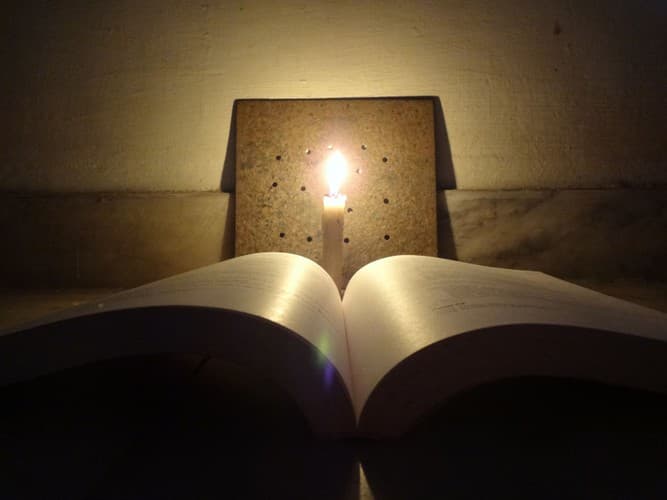
Photo: Open book, Still life by Petr Kratochvil. CC0 1.0. Full image credits.

By October, in certain suburbs, you can tell the Year 12 houses from the street. The downstairs light is on later. The dog is walked at odd hours. A parent standing at the letterbox has the particular stare of someone who now knows more than they ever wanted to know about scaling.
The Higher School Certificate in New South Wales and the Victorian Certificate of Education are not the only senior certificates in the country. They are the two that organise the largest share of the national conversation, and they are the two this essay will stay with. The Queensland Certificate of Education, the SACE, the WACE and the rest have their own weather. The emotional physics are cousins: a long assessed year, a rank that will be used by people who have never met the student, and a family trying not to treat a teenager as a project.
I write this from Melbourne, which means the VCE is the air I overhear on trains. The HSC is the same season in a different accent. Nothing here is a prediction about marks. It is a piece about load. This journal is not a school, not a clinic, and not in the business of getting anyone into a course. If a particular student is unwell, the useful doors are the school wellbeing team, a GP, and headspace — not a feature article.
What the year actually is
From the outside, Year 12 looks like a set of exams. From the inside, it is a year of assessments with exams at the end. SACs in Victoria, school-based assessment in New South Wales, drafts, orals, practicals, the subject that is going well, the subject that is quietly on fire. The final papers matter. So does the preceding eight months of a nervous system that never quite stands down.
The ATAR — the Australian Tertiary Admission Rank — is a rank, not a score out of 100 in the ordinary classroom sense. That distinction is explained, every year, by NESA, the VCAA, the universities, and still arrives at kitchen tables as a moral number. Families talk about “getting a 90” as if it were a temperature. Students compare ranks that do not yet exist. A whole informal economy of rumours grows up around which subjects “scale well.” Some of that talk is loosely based on public scaling information. A lot of it is folklore, and folklore is a poor study partner.
The honest thing to say, without inventing a statistic, is that many students will do well enough for a life they cannot yet picture, and a smaller number will have a year that is genuinely too much. The difference is not grit as a slogan. It is sleep, health, a school that is paying attention, and a home that has not made the rank the price of love.
A composite, not a student I know: a capable English student who drops a method because the Saturday tutor and the Thursday tutor have started to cancel each other out. At home this is treated as weakness. At school the teacher is relieved. The student’s sleep improves. The rank, later, is fine. The year is remembered as the year someone finally said enough.
Stress that helps, stress that eats the week
A rise in alertness before a paper is ordinary. The body is trying to help. Attention narrows. A student who cares will feel that narrowing as nerves. Nerves that still allow sleep, food, a walk, and a conversation with someone who is not in their class are compatible with a long year.
Stress that needs a different response is less seasonal. It does not come down after the SAC. It decides that a single assessment is the whole self. It produces panic in the hall — shaking, vomiting, a white-out of memory — or a refusal to go in. It turns nights into a second shift of rehearsing disasters. It pairs with a collapse in eating, or with exercise that is no longer optional, or with talk about disappearing if the number is wrong.
School counsellors and wellbeing staff see this every year. So do GPs. So do headspace clinicians. There is no prize for waiting until the Monday of the English paper to say that the student has not slept properly since the term break. Early is ordinary. Late is still better than not at all.
If a student cannot sit an exam because they are unwell, there are formal paths — illness and misadventure in New South Wales, special consideration in Victoria, and the school’s own procedures before that. Those paths exist because bodies are not machines. Use them when they apply. Do not treat them as a trick and do not treat them as shame.
What actually helps a loaded brain
Sleep is not a luxury item. It is the thing the year is spent spending. A student who routinely starts work at 10pm because the afternoon dissolved into a phone will have a worse memory the next day, which they will then try to fix with another late night. This is not a character flaw. It is a loop. A phone that charges outside the bedroom is a more effective intervention than a new highlighter set.
Scope the work. A to-do list that cannot be finished by a reasonable human is not a plan. It is a source of shame. Teachers are better at naming the three tasks that matter this fortnight than a parent who last did trigonometry in 1998. Ask the school. Write the three tasks on paper. Do those.
Practise the conditions, not only the content. A student who only ever studies with music, snacks and a chat open will meet the exam hall as a foreign country. Sit one past paper, timed, in a quiet room. Then stop and mark it. One paper done properly teaches more than four papers half-done and then abandoned in a mood.
Keep one non-assessed piece of life. A shift at the cafe, a Saturday game, a choir, a walk that is not “active recovery” branded as training. A year with no other identity becomes a year in which every mark feels like a verdict on the person.
Eat in a way that is boring and regular. This is not a nutrition column. It is a reminder that a body running on coffee and a sports drink will feel like anxiety even when the paper is fine. Parents who can put food on the table at predictable hours are doing academic work, whether or not they can explain a module.
Public guidance from Beyond Blue, headspace and Healthdirect is consistent on the unglamorous list: sleep, movement, people, a limit on late-night scrolling, and help when function drops. There is no secret fourth technique used only by the children of doctors.
The rank can open a door. It cannot tell you whether you are allowed to be a person in the meantime.
Parents, scaling myths and the dinner-table seminar
If you are a parent, your most useful contribution is rarely academic. It is logistical and emotional, which sounds soft and is in fact the whole climate.
Do not run a nightly briefing on what you heard about scaling from a colleague’s cousin. Do not compare your child, even in a joke, with the neighbour’s child who “is on track for a 99.” Do not announce that a particular course is the only acceptable future unless you are prepared to own the cost of that sentence when the number comes in.
Do drive them to the late rehearsal. Do buy the cheap lamp. Do take the dog out so the house is quieter. Do go to your own GP if you are not sleeping. Year 12 is a family system. An anxious adult in the lounge is part of the student’s environment, whether or not you discuss cut-offs.
Siblings need a mention. A Year 9 watching this season will learn what the family worships. If what you worship is a number, they will file that. If what you worship is effort plus sleep plus a sense of proportion, they will file that too.
Money sits under a lot of this and is seldom named. Tutors, review lectures, laptops, the quiet assumption that someone is home in the afternoon — these are not equally available. A student without them is not less serious. A school’s own support, a public library, and a teacher who will stay for twenty minutes are not second-rate options. They are the system as it actually exists.
If conflict at home is the main heat, say that to the wellbeing teacher. “Exam stress” is a thin label for a house that is already loud.
The day of the paper, and the day after
On the day: ordinary breakfast, the right time, the stationery they have already used. Do not introduce a new supplement, a new theory, or a new speech about how this one paper “really matters.” They know. If they are sick, they are sick. Call the school. Do not send a vomiting child into a hall to prove toughness.
After a paper, let it be over. The post-mortem in the car — what did you write for question four — is a classic way to turn a finished event into a second exam. If they want to talk, listen. If they want to eat a burger and not speak, that is a strategy.
The period between the last paper and the results is its own weather. Some students sleep for a week. Some crash. Some start a job. A few become more anxious once the structure is gone, because the year had been holding them up. Keep some routine. Results day will come whether or not you refresh the page.
Results day itself is a public ritual now, complete with news cameras outside high-performing schools. You do not owe anyone a photograph. You do not owe a relative an explanation of a number. If the rank is not what was hoped, the useful sentences are practical: what the offer system actually does, which paths still exist, who at the school can talk through them. Drama can wait. So can blame.
When exam stress is no longer the right name
See a GP if sleep has been poor for weeks; if panic is stopping them entering rooms; if eating has changed in a way that frightens you; if they are using alcohol or other drugs to come down; if they say they cannot do this anymore in a way that sounds like more than a bad Thursday; if they are not safe.
headspace is built for this age. School counsellors are in the building. Kids Helpline on 1800 55 1800 is a line they can use without a parental speech first. Beyond Blue is the public briefing. If you are looking toward therapy, finding a psychologist is the mechanics essay, including Mental Health Treatment Plans as they are commonly used.
When to seek help for a teenager is the broader threshold piece. Read it if you are telling yourself this is “just the HSC” or “just the VCE” and you do not quite believe yourself.
If anyone is in immediate danger, call 000. Lifeline is 13 11 14.
A sense of proportion that is not a pep talk
I like an open book. I like what a long year of reading can do to a mind. I do not like what a culture of ranking does to a household that already had enough to carry. Those two sentences can sit together.
Most adults you know are not doing the job that matched their Year 12 fantasy. They are doing a job they found later, or a job that found them, or a job they retrained for at twenty-seven. The senior certificate is a real piece of work. It is also one season. The adolescents hub is about the rest of the season: friends, identity, screens, and the question of when a young person needs more than a new study plan.
If you are the student: do the next small piece of work, then stop. Sleep. Tell someone if the inside of your head has become a bad room. If you are the parent: feed them, drive them, and refuse to make a rank the family religion. The light in the window can go off at a human hour. The book will still be there in the morning, which is, as it happens, when memory works better anyway.
Questions readers ask
- How much stress is ordinary in Year 12?
- A rise in tension before assessments is ordinary. What is not ordinary is weeks of sleeplessness, panic that stops them sitting a paper, a collapse in eating, or talk about the year being unsurvivable. Ordinary stress still lets a young person recover on some evenings. If they cannot recover, treat that as a health question, not a motivation question.
- Should we hire a tutor for every subject?
- Extra teaching helps when a specific gap is clear. A second timetable stacked on an already full one often adds shame and fatigue. Ask the school teacher what would actually move the mark before you buy another hour.
- What can a parent usefully do in the last term?
- Food, lifts, a quieter house, and a refusal to turn every dinner into a scaling seminar. Let the school run the academic advice. Your job is the floor: sleep, a GP if needed, and a reminder that an ATAR is a number, not a person.
- Where do we go if exam stress has become something else?
- Start with the school's wellbeing staff and a GP. headspace centres see a lot of Year 11 and 12 students. Kids Helpline is 1800 55 1800. Beyond Blue has public pages for young people and for families. If anyone is in immediate danger, call 000.
Nathan writes long-form features on work, sleep, and the quieter corners of adult emotional life. He is based in Naarm / Melbourne. More in Adolescents.