When to seek help for a teenager
Families often wait for a perfect reason to make a call. The useful test is simpler: how long the change has lasted, whether daily life still works, and whether anyone is safe. Here is how that test looks in ordinary Australian systems.
By Elise Hart, Editor · 4 December 2025 · 10 min read
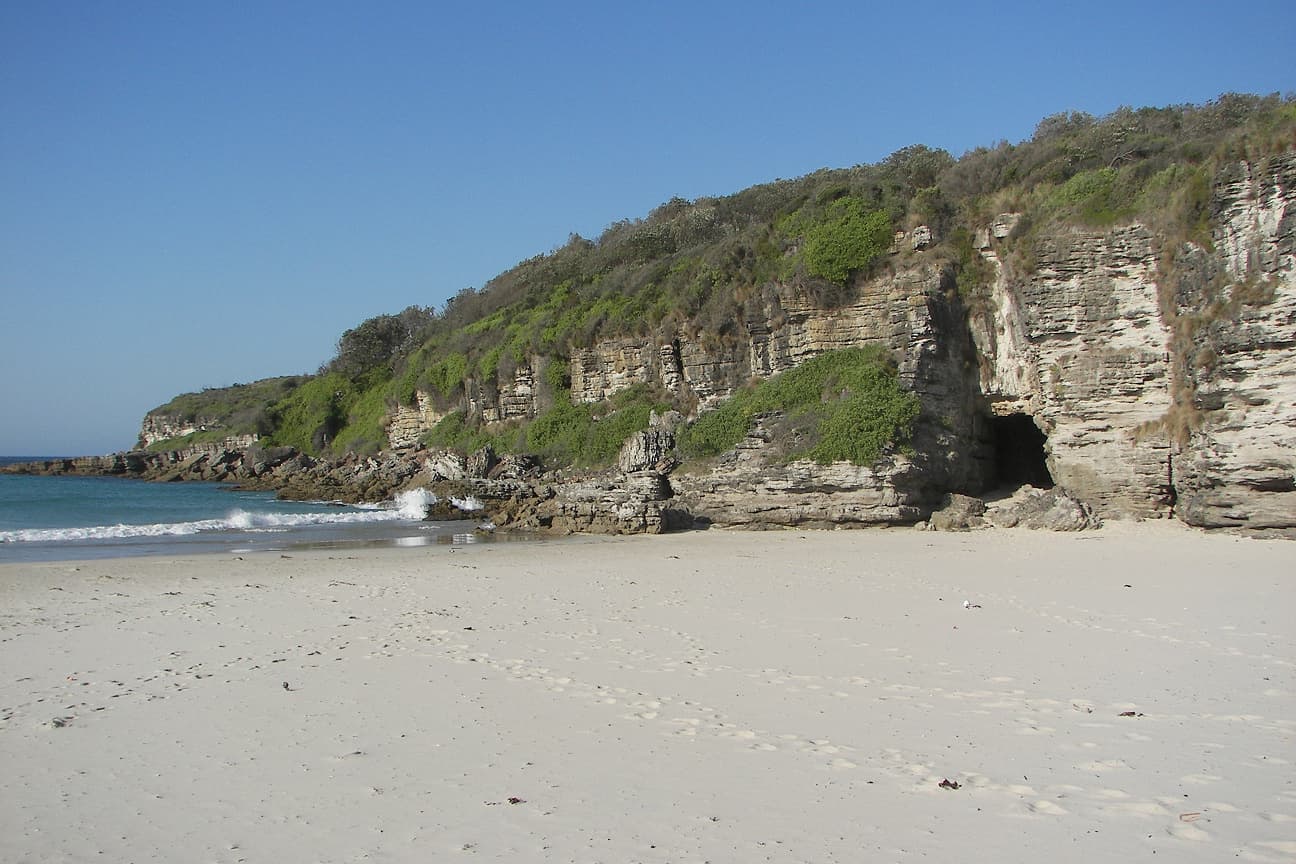
Photo: Cave Beach, Jervis Bay, Booderee National Park, Jervis Bay by Bidgee. CC BY-SA 3.0. Full image credits.

Families are good at waiting. They wait for the holidays to finish. They wait for the friendship to blow over. They wait for Year 11, then for the exams to be done, then for the person they remember from Year 8 to come back through the bedroom door. Waiting can be patience. It can also be a way of not making a phone call that would make the problem real.
This essay is a threshold piece. It will not tell you that every unhappy teenager needs a specialist. It will not tell you that love is enough on its own. It will offer a plain test — duration, function, safety — and a map of the ordinary Australian doors: GPs, school counsellors, headspace, Kids Helpline, and, when it is needed, emergency services. It is information, not a personal assessment. This journal is not a clinic and it does not take patients.
If you are in immediate danger, or they are, call 000 now and come back to the rest of this later.
The test that is better than a vibe
Adults often wait for a cinematic sign: a confession, a scene, a mark that proves something. Young people rarely offer those on a schedule. What they offer is a change. The test is not “are they a bit like I was at sixteen.” The test is three questions you can ask without a textbook.
How long has this lasted? A bad week after a break-up, a public humiliation, or a failed assessment is a reason to be kind and close. A change that is still in place after two or three weeks — sleep, mood, appetite, withdrawal, rage — is a reason to treat it as a pattern. Patterns belong in a GP’s room.
Does daily life still work? Can they sleep enough to get to school some days? Are they still in contact with anyone they like? Can they wash, eat, leave the house for something that is not compulsory? Are they still able to imagine a next month, even a vague one? Function is not the same as happiness. A young person can be sad and still function. When function goes, you are looking at more than a mood.
Is anyone safe? This is the question that overrides the other two. Talk of not wanting to be here, of being a burden, of a specific plan; self-injury; violence; a sense in your body that you should not leave them alone tonight. You do not need to decide whether they “mean it.” You need to treat the words as information and get other adults involved the same day.
These three questions will not produce a diagnosis. They will produce a next step. That is all you need a threshold for.
What “not themselves” actually looks like
The change is often quieter than fiction. A bedroom that was messy and social becomes a closed room. A young person who ate whatever was there starts managing food in a new, rigid way. A decent sleeper is awake at 2am and impossible at 7am. Marks slide, or marks stay perfect while the rest of life thins out. They stop going to the thing they said they loved. They snap, or they go polite and empty.
Some of this overlaps with ordinary adolescents work: identity, exams, a feed that will not leave them alone. The threshold question is whether the weather has become the climate.
Anger can be the surface, as it is for younger children. A slammed door in a sixteen-year-old may be worry with a deeper voice. Substances can be the surface too: alcohol that is doing the social work, vapes that are doing the anxiety work, other drugs that are doing the sleep work. You do not have to sort the categories at the kitchen table. A GP is better at that than a family argument.
A composite, not a real young person: a Year 11 student who has always been “fine,” then stops going to training, then stops answering the group chat, then tells a parent, late on a Sunday, that they are tired of being a person. The parent, who is frightened, hears “tired” and offers a sleep-in. The sentence was larger than a sleep-in. The useful response is: thank you for saying it; we are getting help this week; you do not have to carry this as a secret.
The Australian doors, in the order people actually use them
You, tonight. If they will talk, listen more than you fix. Repeat what you heard. Avoid a speech about gratitude, other people’s worse lives, or how this will look on a record. Ask the safety questions in plain language: are you thinking about dying; do you have a plan; do you feel safe tonight. If the answers frighten you, you are not going to sleep on it.
The school counsellor or wellbeing team. They are in the building where the social story is happening. They can notice absences, speak with teachers, and be a third adult. They cannot prescribe. They cannot make a peer angry. They can be the first professional in, and that is often enough to loosen a stuck week. Email, do not wait for the next newsletter.
The GP. This is still the main front door of Australian mental health care for a reason. A GP can look at sleep, thyroid, iron, attention, mood, eating, substances, and whether a referral is needed. They can write a Mental Health Treatment Plan, the common Medicare path toward rebated sessions with a psychologist under Better Access. Plans and rebates change; the GP has the current version. You do not need to arrive with a theory. Arrive with a week of notes: sleep, food, school, what they said, what you fear.
headspace. The national youth mental health service is built for twelve-to-twenty-five-year-olds and for families who do not yet know whether this is “bad enough.” Centres, online and phone options exist; what is available depends on where you live. For many teenagers it is less loaded than “seeing a shrink.” Let them have that less loaded door.
Kids Helpline — 1800 55 1800. A confidential line and web chat for children and young people. Some will not talk to a parent and will talk to a stranger at 9pm. Put the number on the fridge without a speech. It is also a line parents use when they need a calm voice and the GP is shut.
Beyond Blue — 1300 22 4636. Public information and a 24-hour telephone service. Useful briefing for families. Not a replacement for a GP if the problem is ongoing.
Lifeline — 13 11 14. The 24-hour crisis line many adults already know. Use it if you are frightened tonight and it is not clearly a 000 moment.
000. Immediate danger. A suicide attempt, a young person who is not safe to be left, violence, a medical emergency. Stay on the line. You are not being dramatic.
If you decide a psychologist is the next step, finding a psychologist is the practical essay, and the therapy hub is the wider shelf. Ask for someone who sees adolescents. A good adult therapist is not automatically a good therapist for a sixteen-year-old.
How to raise it without losing the room
Choose a time that is not the doorway before school. Side-by-side helps — a car, a sink, a walk — because faces are a lot. Use observations, not labels. “I have noticed you are not sleeping, and you have not seen anyone on the weekends, and I am worried” is a better sentence than “you are depressed.” They can argue with a label. It is harder to argue with last Thursday.
Offer a choice of door. GP or headspace or school counsellor. Today or tomorrow. You with them or them first with you in the waiting room. Choice is not permissiveness. It is how you keep some dignity in a process that already feels like being managed.
Expect anger. A young person who is frightened will often prefer a fight about privacy to a conversation about pain. Do not use their phone as a trophy. If you have had to look at a phone because you were afraid for their life, say that later, plainly, and be prepared for the repair to take time. Safety first; trust is the long repair.
If they refuse every door, go to the GP yourself and say so. Ask how to invite them in. Ask what to watch for. You are allowed to get advice about a child you live with. You are not entitled to their whole interior. Those two facts can sit together.
Teachers and coaches can be allies if you give them a short, factual brief: we are going through a hard stretch; please tell me if they do not arrive; please do not single them out. You do not owe a staffroom the family history.
What getting help is not
It is not a life sentence. It is not a mark on a secret file that will keep them out of a course. It is not proof that you failed as a parent. It is not, on its own, a reason to pull them out of school, take their whole social life, or announce their business to a relative who cannot hold it.
It is also not a promise of a quick plot. A first GP visit may end with blood tests and a return appointment. A first psychologist session may feel awkward. A headspace waitlist may be real. Stay in the process long enough to see whether the door you chose can actually hold them. If it cannot, try the next door. Persistence is a form of care.
Medication, if a doctor ever raises it, is a medical conversation. This essay will not recommend a tablet. It will say: ask what it is for, what the side effects are, and what else is being tried at the same time. Talk therapy and sleep and school adjustments are not lesser options. They are often the first ones.
If they are not safe
Stay with them. Remove obvious means if you can do that without a fight that makes things worse. Call 000 if you need an ambulance or the police to keep someone alive. If you are not sure, call Lifeline or Beyond Blue and say you are not sure. A person on those lines would rather you rang.
Emergency departments are imperfect and they are still the right place for some nights. Take a bag. Take a note of what they have said and taken and when. Take a second adult if you have one. You may wait. Waiting in a hospital is still better than hoping a closed bedroom door is a plan.
After a crisis night, the follow-up is the job. A discharge letter is not a cure. Book the GP. Tell the school what they need to know in one paragraph. Ask what the after-care actually is. Families get dropped here. Do not be dropped if you can help it.
A note on parents who are also not all right
You cannot be the only container. If you are not sleeping, if you are drinking to manage their drinking, if you are frightened of your own temper, you need a door too. A GP will not be surprised. Beyond Blue will not be surprised. A friend who can take a younger sibling for a night is not a luxury. They are infrastructure.
Couples should not use a young person’s crisis as evidence in their own trial. Separate, later, if you must. Tonight there is one plan and one set of numbers.
You do not need to be sure they are unwell. You need to be sure you have not left them alone with a change you can no longer read.
After the first appointment
Help is a season, not a scene. Keep the ordinary scaffolding: food, a lift, a house that still has a light on in the kitchen. Do not make every conversation a symptom check. Do ask, once or twice a week, the smaller question: is this helping; do you want a different door.
If school is part of the problem, ask for a reasonable adjustment for a while — a later start, a reduced load, a quiet place to sit a paper. That is not “giving in.” It is keeping them in a life. If school is the only remaining structure, be careful about pulling it down.
Privacy still matters. They may tell a psychologist things they will not tell you. That is often the point. Your job is the floor, not the transcript.
If you need the everyday language work that starts younger and still applies, talking to children about feelings remains a good page. If you need the professional step, use the therapy essays rather than a midnight forum.
You are allowed to make the call on an ordinary Wednesday, with an incomplete story and a child who is furious that you made it. That is not overreach. That is what a threshold is for: a sheltered bay, after a stretch of open water, where someone else can help you look at the weather and decide what to do next.
Questions readers ask
- What is the difference between a hard month and a reason to call a GP?
- A hard month still has islands of ordinary life — some sleep, some friends, some future. Call a GP when the change has lasted more than a couple of weeks, when school or sleep has collapsed, when they are isolated, or when you are frightened. You do not need a diagnosis to book the appointment.
- What if they refuse to go?
- Do not turn the doorway into a wrestling match. Explain what you have noticed, offer a choice of GP or headspace or school counsellor, and go yourself first if you must, to ask how to invite them in. Keep Kids Helpline — 1800 55 1800 — visible so they have a door that is not you.
- Is a school counsellor enough?
- Sometimes. They are close to the social world that is often the problem, and they can be the right first adult. They are not a substitute for a GP if there is a health question, and they are not a crisis service. Use them early, and use someone else as well if the problem is bigger than the school day.
- What do we do if they are not safe tonight?
- If they are in immediate danger, call 000. If they are in crisis but you are not sure it is an emergency, Lifeline is 13 11 14, Beyond Blue is 1300 22 4636, and Kids Helpline is 1800 55 1800. Stay with them if you can. Do not leave a distressed young person alone with a plan and a closed door.
Elise edits the journal and writes about anxiety, evidence-based care, and how Australian families actually find help. She lives on Gadigal land in Sydney. More in Adolescents.